Products
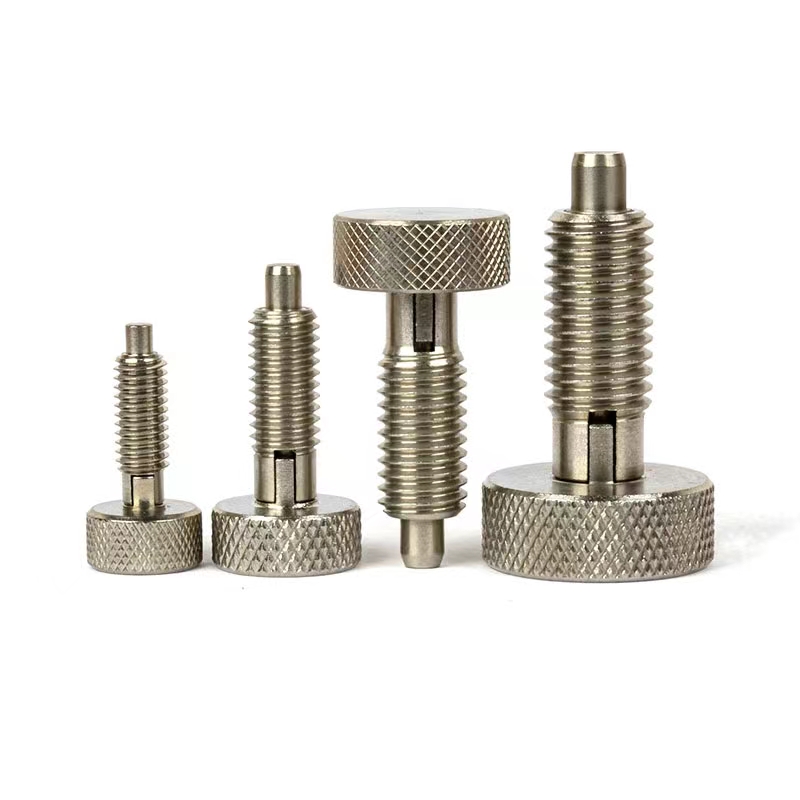
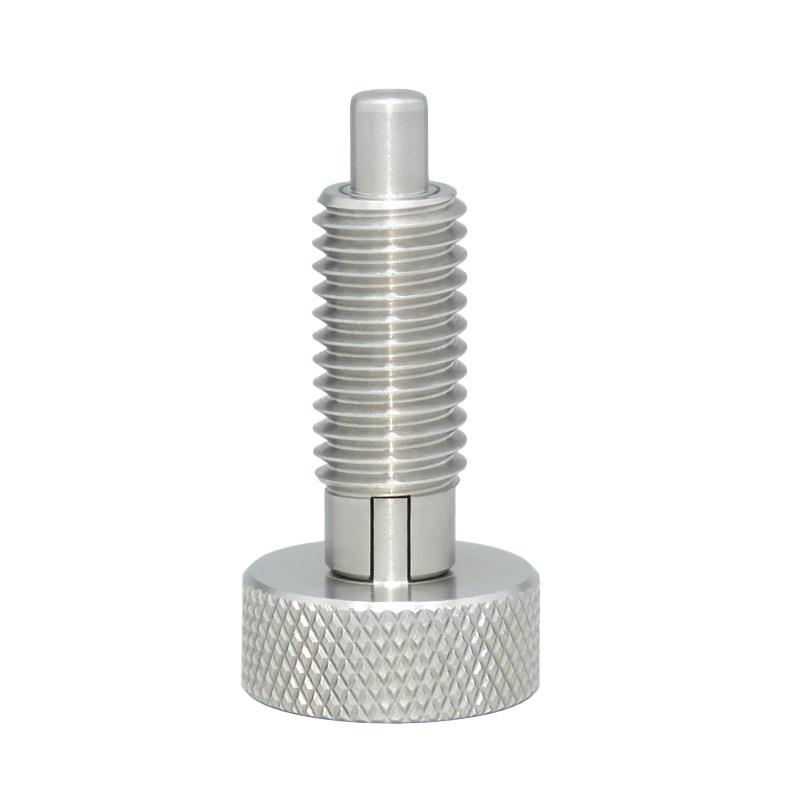
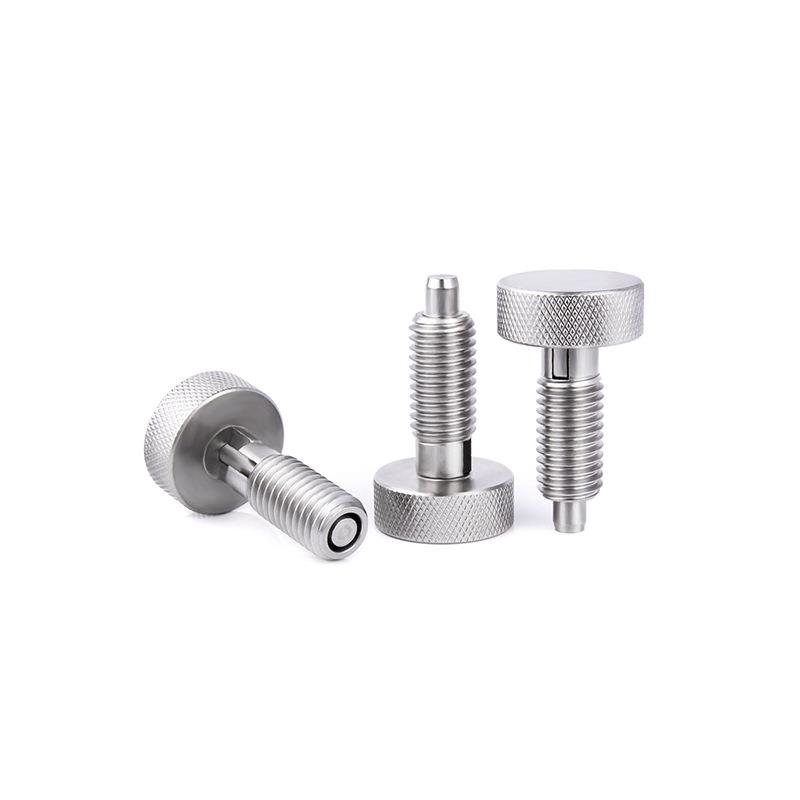
Spring Plunger
A spring plunger is a small, threaded body component containing a spring-loaded ball or nose that projects from one end. When the ball or nose is pushed against a mating surface or detent, the internal spring lets it retract and then return, providing a controlled, repeatable holding, locating, or indexing force. Compact yet versatile, spring plungers are widely used wherever parts need to be positioned, held, or released quickly without complex mechanisms.
Product Name:
Spring Plunger/Indexing PlungerMaterial:
Stainless steel (SS303 / SS304); knob, body, and pin all stainless; spring in stainless steelSurface Finish:
Polished / plain stainless; passivated for corrosion resistance; knurled knob surfaceSize:
Body thread M6–M16; customization on requestThread Type:
External metric (M) or Imperial (UNC/UNF) body thread; standard pitchHead Type:
Round knurled knob (diamond knurl) for hand grip.Drive Type:
Hand-operated — pull knob up to retract the pin; no driver/wrench neededLength Range:
Thread length approx. [10 mm – 30 mm]; overall length per modelDrill Point Type:
N/A — spring-loaded retractable pin with rounded/chamfered nosePin Diameter:
Approx. Ø3–Ø8 mm (commonly [Ø5 / Ø6]); chamfered nose for easy engagementLocking Type:
Non-locking (hand-retractable) — pin springs back automatically on releaseSpring Force/Pull Force:
Rated by pin end force and pull-out force (light / standard / heavy options)Suitable Material:
Installs into tapped holes in metal; pin engages mating bores/detents in adjustable partsPin Shear Strength:
Rated by pin shear capacity, varies with pin diameter and materialApplicable Standard:
Manufacturer specifications (e.g., Halder / Elesa / JW Winco catalog standards); no single universal standardApplications:
Quick positioning and indexing of adjustable parts; jigs and fixtures, machine guards, height/length adjustment, fitness and furniture equipment, quick-release mechanismsCustomization:
Customizable material, thread size, pin diameter/stroke, knob diameter, spring force, finish, OEM marking, and packaging
Send Inquiry
Product Description
A spring plunger is a small, threaded body component containing a spring-loaded ball or nose that projects from one end. When the ball or nose is pushed against a mating surface or detent, the internal spring lets it retract and then return, providing a controlled, repeatable holding, locating, or indexing force. Compact yet versatile, spring plungers are widely used wherever parts need to be positioned, held, or released quickly without complex mechanisms.
Hot Tags: sprint plunger, indexing plunger, locking,knob,non-locking
Related Categories
Send Inquiry
Please feel free to fill your inquiry in the form below. We will reply you in 24 hours.
Related Products





X
We use cookies to offer you a better browsing experience, analyze site traffic and personalize content. By using this site, you agree to our use of cookies.
Privacy Policy